
Pranabowl's Blog

Animals and singing bowls
The story of how I discovered sound healing as a way to help animals — and, at the same time, myself If someone had told me ten years ago that I would one day study to become an equine sound healing practitioner, I probably would have laughed out loud. I’ve always been a rather wild, restless type — the kind of person who does at least five things at once, bumps into walls on the way, and usually forgets to breathe. I assumed that meditation was something reserved for people who were naturally quiet, ethereal, and serene — certainly not for someone as frantic as me. But life is strange in that way. It sometimes leads a small human being exactly where she never imagined herself going — and then that same small human suddenly realises that the strange thing she stumbled into was precisely what she needed the most. My first encounter with singing bowls I had the opportunity to explore singing bowls when someone who had been offering sound healing to horses for years offered to introduce the practice to me for free. She told me she had a strong intuitive feeling that she should reach out and show me this form of healing. At first I was quite skeptical, but I accepted the invitation, thinking that perhaps the horses might enjoy listening to music. After all, many stables played the radio. I didn’t yet understand that singing bowls held something far deeper than sound that can be heard with the ears. When I saw how my horses reacted to the sound of the bowls for the very first time, I was astonished. They seemed surprisingly interested and, after their initial confusion, leaned their bodies as close to the bowls as they could get. We also tried playing a bowl for our cat, and it was incredible to see how she ran from another room, rolled onto her back beneath the bowl, and immersed herself in the soothing sound bath. When I tried playing the bowl myself, I noticed how strongly the vibration resonated through my body. It felt like an extremely subtle inner massage. I was curious, and soon bought my first singing bowl, which I began using regularly with my own horses. How sound healing affects horses Sound healing affects the body primarily through vibration. When a bowl is gently struck, its sound travels both through the air and through the body — and because most of both humans’ and animals’ bodies consist of water, the vibration reaches all the way down to the cellular level. Sound travels many times faster in water than in air, which is why the resonance of a singing bowl reaches so deep. Sound healing works simultaneously on multiple levels: through the sense of hearing and brainwave activity, within the physical structures of the body, and on an energetic level. The vibration of the bowls helps regulate the nervous system, shifting brainwaves into a calmer state. As a result, breathing deepens, blood pressure lowers, and the mind settles. It’s as if you wake up from the edge of sleep — a state that often naturally arises during a sound session, both in humans and in animals. Each session is unique. Sometimes the relaxation shows only subtly in the horse’s behaviour during the treatment, but afterwards it will withdraw to rest quietly. Other times the horse becomes deeply calm within moments. It is always moving to witness a horse relax so profoundly that it eventually lies down to rest. Every horse person knows that for a prey animal, lying down near a human is a tremendous sign of trust. The horse who didn’t want to be touched At the time I first learned about sound healing, I had a very sore horse named Dino. He couldn’t tolerate being touched, especially by unfamiliar people. Massage or other physical therapies were difficult because Dino would react defensively, and I couldn’t risk putting anyone in danger. I had been wanting to help him for a long time, but didn’t know how. Through sound healing, Dino eventually began to relax and express himself more gently. We found a shared language through the vibration of the bowls and our mutual presence. It became our lifeline in the midst of pain and worry. A moment of letting go — and my own healing Dino’s story ended sadly. He was so ill that no treatment could provide lasting relief. Sound healing allowed me to ease his discomfort even a little during the final weeks of his life. I wanted to learn more about sound healing and help make it better known, so I had invited a trainer specialising in equine sound healing to teach a course for us. The course happened to fall just two weeks after Dino passed away, and I almost cancelled because I was so exhausted and overwhelmed. I felt I couldn’t manage it — yet so many people had signed up that I didn’t want to let them down. I hadn’t slept properly for months and was completely burnt out. The timing felt entirely wrong, but I’m grateful I didn’t cancel. During the course, we played singing bowls for several hours, and something in my nervous system finally shifted. From that night on, I began to sleep peacefully again. The path to becoming an animal sound healing practitioner After everything I had seen and experienced, I could no longer ignore the almost magical power of the singing bowls. The bowls didn’t take away my grief, but they created space for it and calmed my nervous system so I could recover. My experience of supporting a suffering horse at the end of his life — and of regulating my own nervous system through sound — was so transformative that I decided to study equine sound healing the following autumn. Through the bowls, I discovered a way to be present, to communicate with animals, and to help them rest and restore. And in doing so, I helped myself as well. Singing bowls create a shared bubble for animals and humans — a space where connection deepens and understanding of each other’s emotions and needs rises to a new level. For years now, I have used singing bowls to support my horses, my cat, and my dogs, and I have taught many courses on equine sound healing. The bowls became an irreplaceable companion on my journey back to myself and back into connection with animals — and they continue to be a natural part of our everyday life. Next spring, I will be hosting an Animal Sound Healing Practitioner Training at Enkelikartano in Finland, where participants can dive into the fascinating world of singing bowls. If you feel called to learn how to listen to and support animals through this gentle yet powerful healing method, you are warmly welcome to join us.
Learn more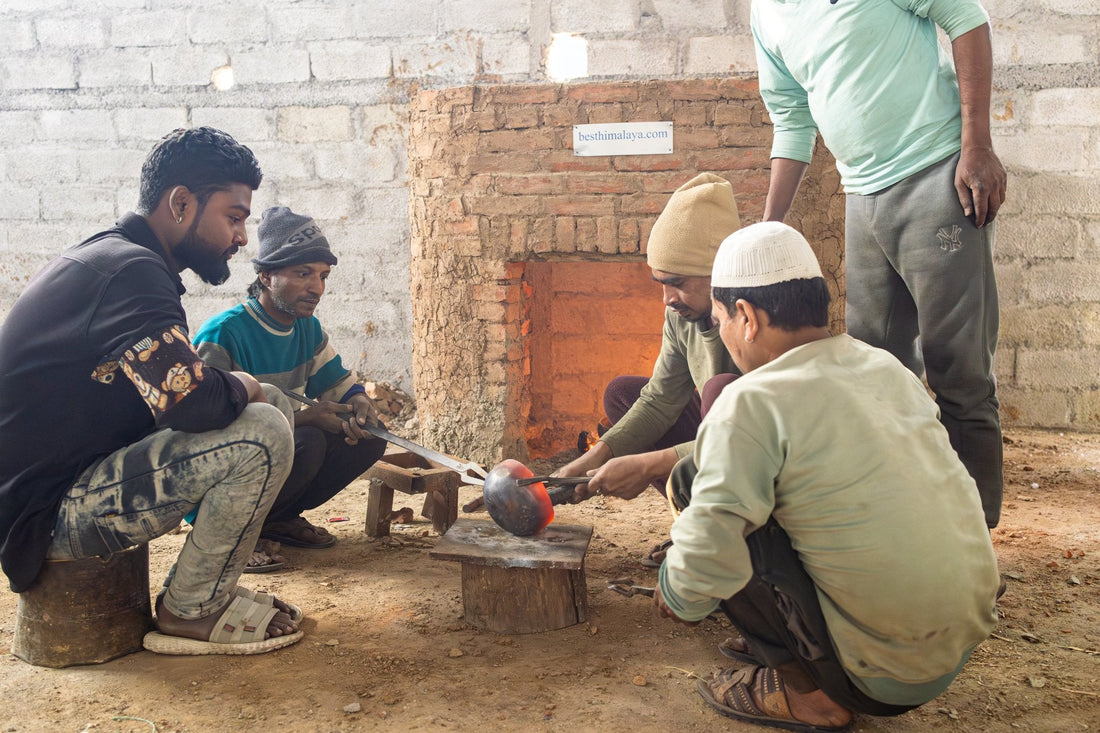
How are singing bowls made?
The making of singing bowls is a centuries-old tradition The making of Tibetan singing bowls is a centuries-old craft that combines expertise, spiritual tradition and an understanding of sound vibrations. Traditional hand-hammered singing bowls are made from a bronze alloy of approximately 73% copper, 25% tin and 2% zinc. Pranabowl singing bowls are made in origins of singing bowl, respecting centuries-old traditions. This unique craftsmanship has been passed down through generations, creating high-quality singing bowls. According to some legends, the bowls are made of seven metals. The seven metals often mentioned are: gold, silver, copper, tin, iron, mercury, and lead. There are two major theories behind the idea of the seven metals. One theory is that these represent the seven planets known to the ancients. The other theory is that these seven metals are derived from sacred minerals and metals of the region. However, this has been shown to be mostly a myth, as tests on singing bowls have not found any significant amounts of these metals. However, there are rumors that some manufacturers may add very small amounts of various metals to keep these claims alive. However, the amount is structurally insignificant. Manufacturing requires professional skills In production, the metal alloy of the sound bowls is melted and cast into a round disc, from which the actual forging process begins. The hot metal disc is forged by hand with hammers – often in collaboration with several craftsmen – slowly and carefully until the round shape of the bowl is created. Each hammer blow has its own meaning: they shape both the external shape of the bowl and its internal resonance. This slow and meditative way of working allows the end result to be a sounding instrument that carries a deep, multi-layered sound and strong vibration. The bowl is cooled, cleaned and finished. The surface of the bowl is often left slightly rough to preserve its authentic look and sound. Singing bowls can also be hand-cast from a single metal, brass. This allows for cost savings while still providing high-quality sound. Brass cast bells are more shiny and decorative in appearance. Handmade with our heart The vibration of a handmade singing bowl is felt strongly throughout the body. For this reason, handmade singing bowls are particularly popular in singing bowl therapies, meditation, and singing bowl relaxation. The sound of a Tibetan singing bowl is not a coincidence, but the result of skill, silence, and countless hammer blows, all made by hand, with heart, and intention.
Learn more
How Do Singing Bowls Work? Healing Effects and Sound Therapy Benefits
The power of sound vibration Singing bowls have a variety of effects based on the sound waves and vibrations they produce. Sounds affect us on many different levels, both physiologically and energetically, as well as through the sense of hearing and the brain. The effects of singing bowl therapy have been extensively studied, and in our training courses we delve extensively into the research results. Entrainment The deeply relaxing effect of sound vibrations is based, among other things, on synchronization (entrainment), whereby brain waves (electroencephalogram) synchronize with harmonic sounds, shifting them from the beta level to the alpha and theta levels, which are associated with deeper relaxation. Other physiological functions of the body, such as the nervous system, breathing and heart rate, entrain with changes in the electroencephalogram. Calming the nervous system plays an important role The physiological effects of singing bowls are primarily based on calming the nervous system; when playing singing bowls, the aim is to activate the parasympathetic or resting nervous system and calm the sympathetic or stress nervous system. As the nervous system balances, the body begins to return to its normal state, allowing singing bowls to produce a variety of effects on the body and mind. Effects of singing bowls: Stimulation of the vagus nerve drop in blood pressure and slowing of heart rate Deepening of breathing and increased mucus secretion activation of bowel function increased feeling of relaxation reducing stress hormone levels increased secretion of oxytocin, endorphin and serotonin hormones improved sleep quality increased alertness muscle relaxation and relief of muscle tension increased calmness, balance, self-control and self-awareness improvement in body image The path to inner wisdom In addition to the physiological effects, the vibrations and sound waves of the bowls provide holistic care for both the body and mind, and the psychological benefits they bring can be seen as increased emotional balance, new insights, and a lighter feeling. Sounds affect psychological well-being both through the body and by directly treating the mind. When the body and mind become quiet, what remains is presence in the present moment. We all have an inner wisdom, the so-called voice of the soul or heart, which can easily be lost in the constant stream of thoughts. Healing sounds help the body and mind to become quiet, making it easier to access and listen to your own inner wisdom.
Learn more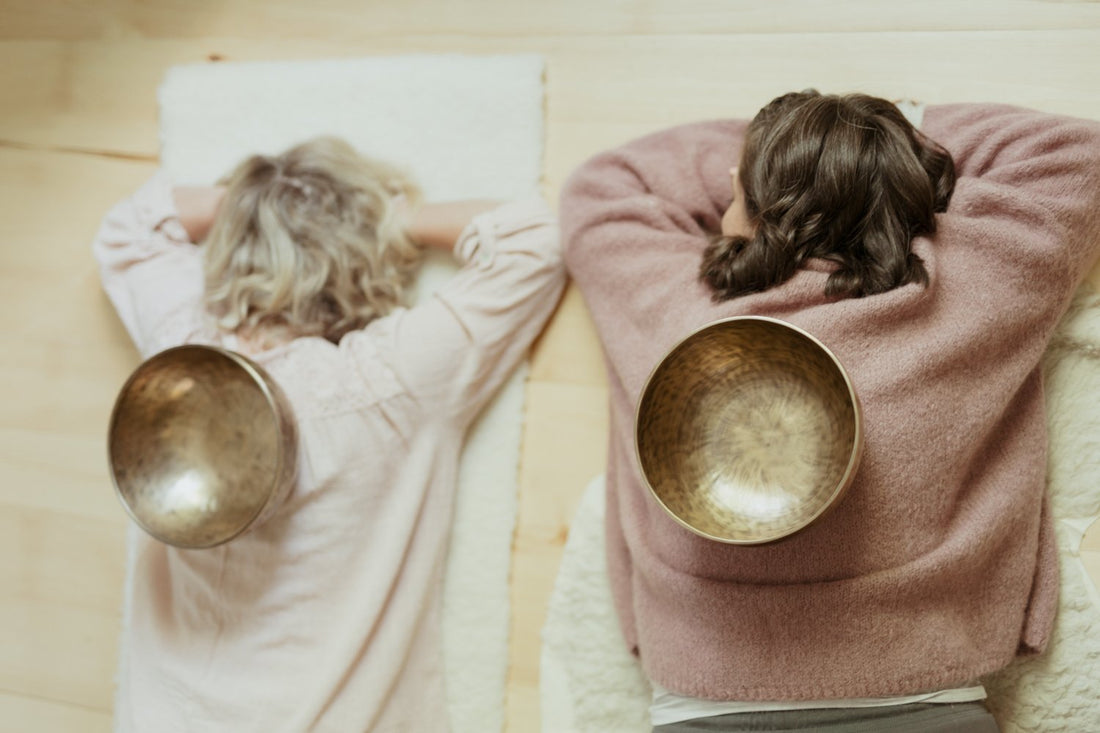
What is singing bowl therapy?
Singing bowl therapy is a general term for individual treatments, self-care, and group relaxations using singing bowls. In all of these, the goal is to achieve physical, mental, and emotional relaxation through sound. Singing bowls in group relaxation Singing bowls are very commonly used as a group relaxation, or so-called chord bath, which is also called Sound healing. During a relaxation session of about 30-60 minutes, group members can curl up under a blanket or sit while listening to beautiful natural sounds and also feel sound vibrations in their bodies. Group relaxation is often experienced as deeply relaxing, and even if the mind does not calm down, activity meters can show up to 20 minutes of deep sleep. The body and body functions are restored, even if the hour is very inspiring on a mental level. In addition to singing bowls, group relaxations can also use gongs, sea drums, koshi and zaphir wind chimes, as well as crystal bowls and harps, rain sticks and other acoustic instruments. However, the main emphasis is always on singing bowls. Singing bowls in individual and couple therapy Individual therapy differs from group relaxation in that the bowls are also played on the client's body. The therapy is performed in both prone and supine positions, and different sized bowls are used on different parts of the body. Individual therapy is slightly more powerful in its effects than group relaxation. Individual therapy usually lasts 60 minutes for adults and the treatment time is shorter for children. Singing bowls can be used for couples therapy, which is a combination of individual therapy and group relaxation. In couples therapy, two clients are treated simultaneously and the bowls are played on and around the body in a chord bath-like manner. Other therapeutic instruments can also be combined with the therapy. Couples therapy is sought by friends, couples, parent-child pairs, etc. Effects of sound bowl relaxation The sound of singing bowls is perceived as pleasant and relaxing, and calming the mind. This causes our brain waves to slow down, which also calms other body rhythms, such as the nervous system, breathing and heart rate. The sound waves emanating from the bowls resonate in our body and the sound vibration can be felt even when the bowl is played further away from the body. Singing bowl relaxation is said to be deeply relaxing for the body, mind and soul. Read more about the effects Disadvantages of Singing Bowl Relaxation The disadvantages of singing bowl therapy are often asked about, and there are some things you should know before going for therapy. The goal of traditional singing bowl therapy is to restore the body to its normal function, both physiologically and energetically. Tibetan and Chinese medicine focus on treating health and strengthening the body holistically on all levels: physical, mental, emotional, and spiritual. Situations where you should exercise caution when using singing bowls include those with a pacemaker, those undergoing cancer treatment, and those who are otherwise seriously ill (physically or mentally). In these cases, you should seek permission from a doctor to determine whether sound relaxation is safe. For example, the effect of sound on cancer cells has already been studied and is still being studied. In light of current research, we do not use singing bowl therapy or group relaxation during cancer treatments, as we do not yet know enough about how different frequencies affect cancer cells. Singing bowl relaxation and pregnancy During pregnancy, you can safely come to a group relaxation or sound bath. Singing bowls are not used during pregnancy when played on the body, as there is no research data on the effect of vibrations on the fetus in amniotic fluid. When played around the body, singing bowl relaxation is safe and wonderful, for both the expectant mother and the fetus. If you are unsure whether you can go for sound bowl therapy or participate in group relaxation, please check with the therapist or group instructor. Our trained sound bowl therapists and sound bath instructors will be able to answer your questions and always put the client's safety first. Self-healing with singing bowls You can easily treat yourself with singing bowls. With regular use, the effects of singing bowls become stronger. Self-treatment can be done with small bowls around the body, enjoying the healing sound. Biscuit-sized and large singing bowls are also suitable for playing on the body, so you can feel the sound vibration in your body. We organize training on self-care of singing bowls and care for family members at the Caring for Singing Bowls Days, which are held at Enkelikartano in Finland.
Learn more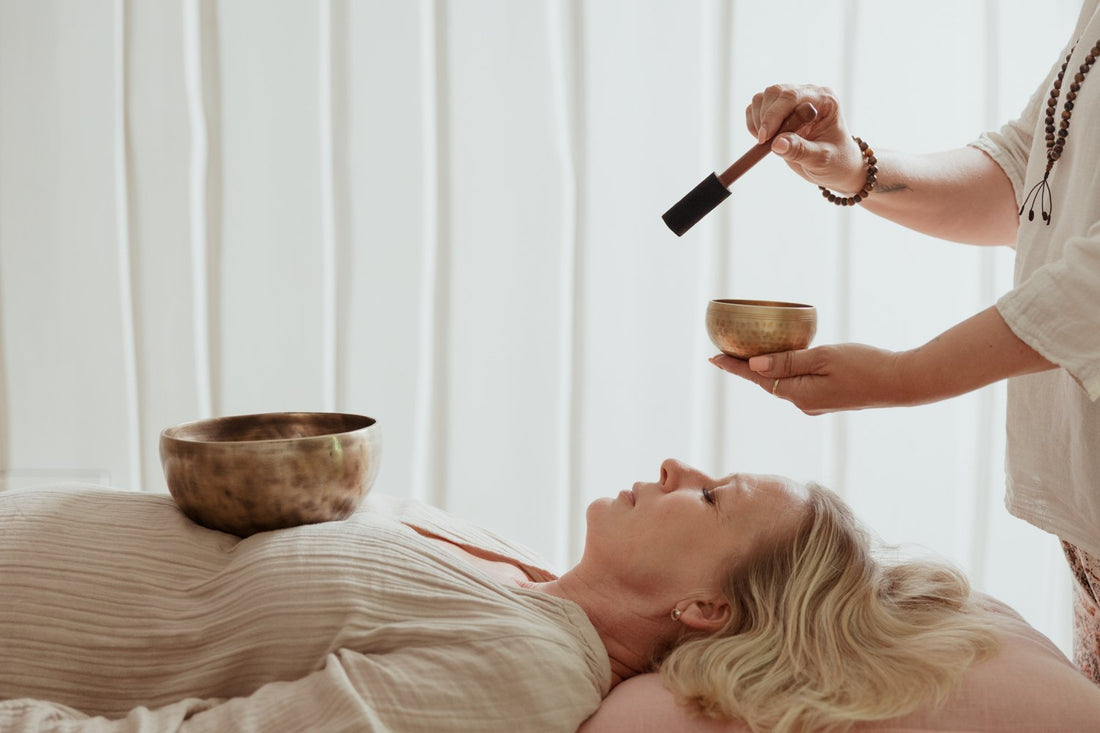
What are singing bowls used for?
Singing bowls have a variety of uses and can be utilized in countless different ways. Originally, singing bowls were used in spiritual work to support meditation, rituals, and ceremonies. Later, they also found their way into healing and group relaxation. Singing bowl relaxation The healing effect of singing bowls and their ability to induce deep relaxation have increased their popularity significantly. Professionals use the bowls in individual and couple therapies, as well as in sound baths, or group relaxations with a singing bowl. The use of singing bowls has also become more common in self-care and in family circles as a treatment for family members. The relaxing effect of sound vibrations is increasingly used in schools, daycare centers, and individual and group therapy for special needs children. Sound relaxation is suitable for babies, for example, as a parent-baby rhythm bath. Babies can also be treated with a parent, listening to beautiful, natural sounds. It is not necessary to play singing bowls on the bodies of babies and young children. It is enough that the sound vibrations come from around the body. Singing bowls to support well-being at work Sound baths are popular as a program for workplace well-being days, and singing bowls have found their way into workplaces as supporters of creativity, relaxation, and community. Organizing a so-called sound bath for a work well-being day is easy and practical, because up to 20 people can participate in the hour-long relaxation at the same time. Of course, sound baths can be organized for larger groups, but in order to get the effects of the sound vibrations and ensure that the sounds of the bowls can be heard, it would be ideal for the participants to be close enough to the instructor. Singing bowl relaxation in nature In nature, sound vibrations come into their own. The harmony of nature and the natural sounds of the bowls complement each other. Sound bowls are used, for example, in forest harmony baths, which can be arranged in a variety of environments: on a rock, in the grass, in the shade of trees, on a pier, in a lean-to, in a hut, in a hammock or even in a cave. Singing bowls can also be used for a shorter period of time in winter, for example, while sitting by a campfire. Singing bowls to support meditation and self-care Singing bowls are a great support for independent sound and presence practice. They are used at the beginning and end of meditation or mindfulness practice, in working with your own voice, or as a background for mantra chanting. Self-care can be done on yourself, on your body or in your aura. With a singing bowl, you can create mini moments of relaxation in your day! Singing bowls at events Today, sound baths are brought into many different events: bachelor parties, baby showers, retreats and soirees. Sound baths have also become part of the program at various spiritual or yoga events. At trade fairs and events, sound baths can be organized, for example, in an auditorium, where you can sit and enjoy the healing sounds. Sound bowl relaxation for athletes Athletes use singing bowls to support recovery and to help with mental well-being and mind control. Sound vibrations have been shown to have an effect on metabolism, blood circulation, lymphatic circulation and breathing, and are therefore a good aid in recovery from physical exertion. In addition to studio and self-treatment, singing bowl relaxation is used as a rhythmic bath for sports teams. Balance for animals and nature Singing bowls also support animal well-being. Animals like to come near a vibrating singing bowl and are able to regulate the treatment time themselves. Singing bowl therapy is used with, for example, horses, dogs, cats, cows, sheep, alpacas, goats and chickens. Animals enjoy the natural vibrations. You can also care for nature and wild animals. The sound vibrations are natural and the bowls are made from natural raw materials. You can care for Mother Earth, water bodies, trees and wild animals. How do I get started with using bowls? We organize high-quality training on the use of singing bowls as a self-care tool, for professional use, and to support various group relaxations at our Enkelikartano course center in Finland. Welcome along to the sound therapists!
Learn more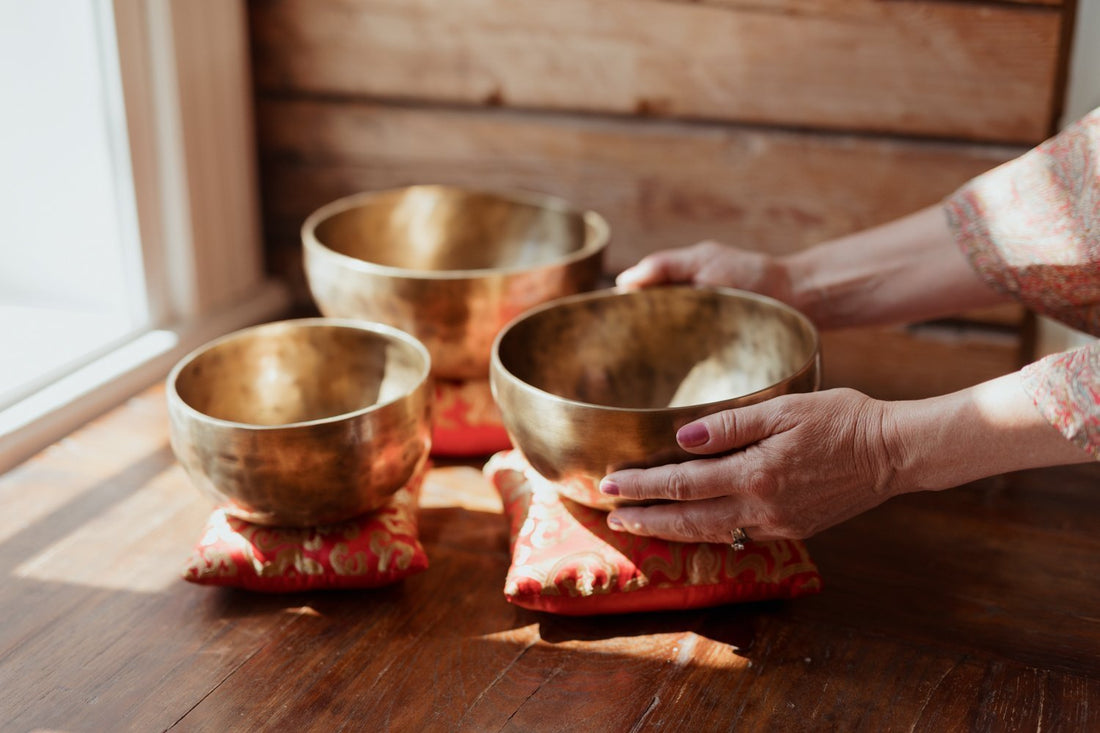
How do I choose a singing bowl?
Choosing a singing bowl In this article, we will guide you on how to choose the right sounding bowl for you. Whether you are a beginner or a more experienced player, this article will provide you with useful information on how to build your own bowl family. The choice of singing bowl is primarily influenced by the purpose for which you want to use the bowl. Prana Bowl offers a wide range of singing bowls in different sizes – from small ones, such as the Small Prana and the Kids Prana , to medium-sized ones, such as the Heart Bowl and the Mantra Bowl, to large bowls, such as the Roots Bowl, the Great Roots Sound Bowl and the Mother Earth Bowl . The size of the bowl is usually indicated as a diameter measurement and the bowls also have their weight marked on them. The dimensions of hand-forged sound bowls are indicative and may vary slightly. The size of the singing bowl and its effect on the sound Small singing bowls (diameter about 10 cm) produce higher sounds and their vibration is fast. In this case, the effect of the sound is not felt as strongly in the body, but it works best for calming the mind, supporting meditation and working on the aura. The small bowl can also be used on the body, for example on the forehead chakra. It is a great addition to the Healing set , whether it is a chord bath or individual treatment. The small bowls balance the highest chakras: throat, forehead and crown chakra. Medium-sized singing bowls (diameter about 13-16 cm) produce tones that are often in the range of the human voice. These bowls have many clear overtones, and their sound often includes a rhythmic, vibrating movement – like a gentle "wah wah wha" effect, similar to vibrato. This vibration, combined with the beautiful overtones, supports a deep relaxation and meditative state. Large singing bowls (diameter about 19-28 cm) produce low, strong vibrations that are strongly felt in the body. Their fundamental tone is often below the human voice, which means that the tone may be felt in the body more than it is heard. The higher tones can be heard more clearly. Large bowls are particularly useful in treatments, chord baths, group relaxation or, for example, in yoga, when a long-lasting, consistent sound is needed in the background. Sound structure and tones The sound of a singing bowl is not just one note, but contains several harmonic tones. The most important of these is the fundamental tone , or base tone , followed by higher overtones . These overtones enrich the sound of the bowl and deepen its healing effect. In small singing bowls, the fundamental tone is already quite high, and some of the upper tones may be more difficult for the human ear to perceive. In medium-sized and large bowls, the sound spectrum expands and the upper tones are more clearly distinguished, making the sound multidimensional and therapeutic. Which singing bowl should I buy? A small or medium-sized bowl is often chosen as the first singing bowl. They are also well suited for children and are easier to use due to their smaller size and weight. The bowl family can then be expanded when you have become familiar with the sound of one bowl and learned to play it harmoniously. One bowl already has several healing overtones.
Learn more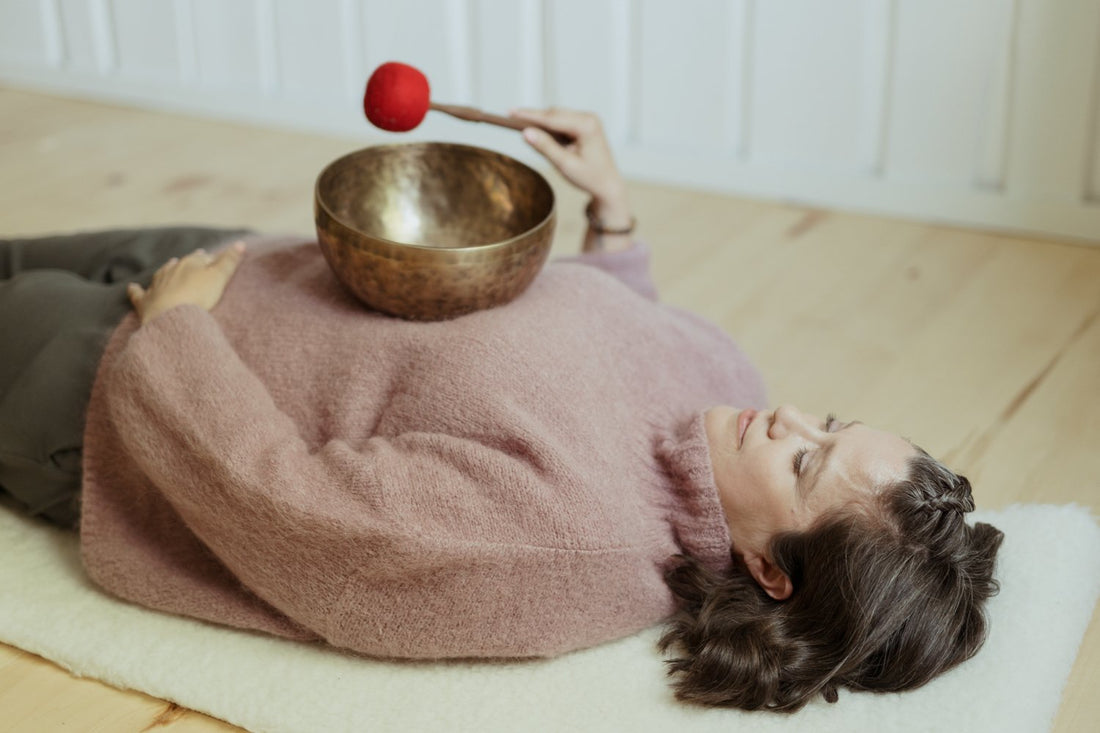
This is how you play your singing bowl
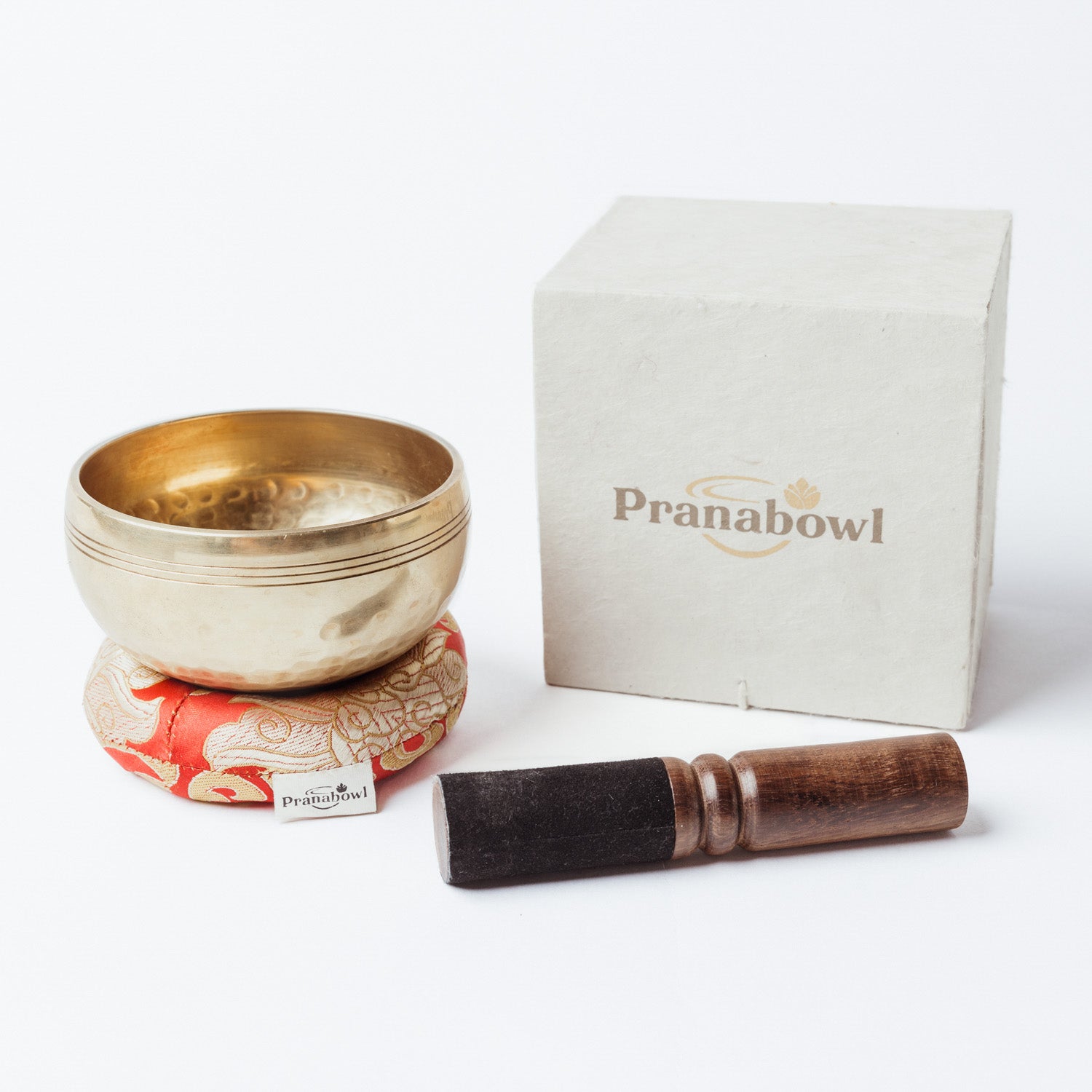
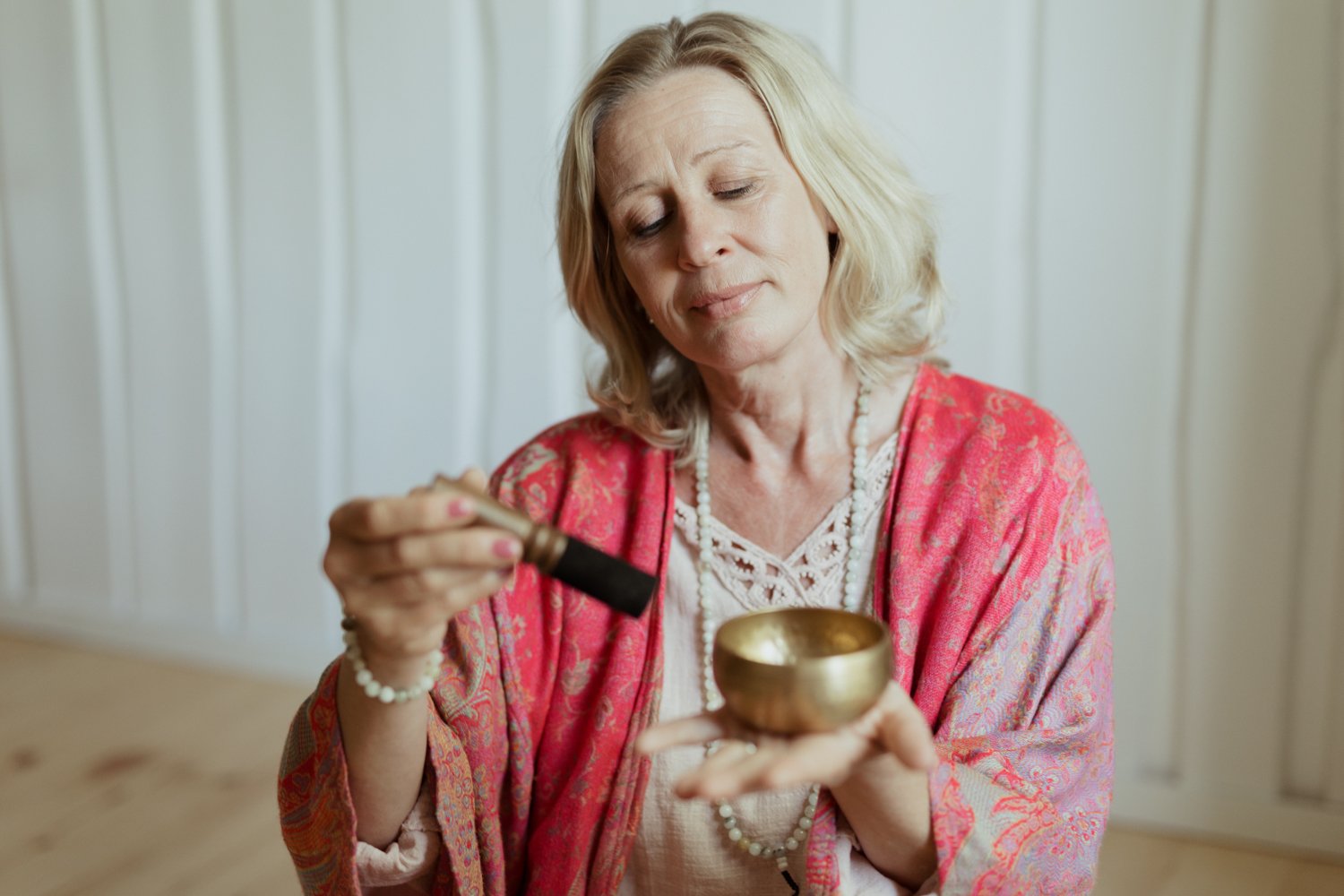
How to play singing bowls? You can emphasize different sounds from your singing bowl by changing the mallet or playing style. In this article, I will give you advice on how to get harmonious and diverse sounds from your bowl. The singing bowl is played with a striker, or mallet, which comes in various sizes and types. There are two basic methods for playing the singing bowl: by striking the outside or inside edge of the bowl with the mallet, or by singing, or rubbing the mallet on the outside edge of the bowl. The soft mallet produces a rich and gentle bottom tone. Pranabowl has two soft mallet sizes, medium and large. The medium mallet is suitable for both medium and large bowls. The large mallet produces an even softer sound when used with the larger bowls, the Great Roots and the Mother Earth Bowl. A suede-covered, so-called hard stick is especially suitable for making a bowl sing, but it can also be used to lightly strike the edge of the bowl. This will allow the brighter upper notes from the bowl to be heard most strongly. The size of the mallet is chosen according to the sound bowl: a small mallet is best for small bowls and a larger stick for large bowls. Most of our bowl sets already include the correct size mallet. If a mallet is not included in the sound bowl set, the product will state which size would be best for the sound bowl in question. Playing a singing bowl in hand Place the bowl on your palm, fingers relaxed but not touching the bowl. Gently tap the top of the bowl with a soft or hard mallet. Let the sound play out peacefully before the next strike. The friction of the bowl against the skin of the palm keeps the bowl in place and allows for a clean sound. Singing the singing bowl Singing involves continuously rubbing the mallet along the top of the bowl to maintain the sound. Singing can take practice, but the bowl's characteristic humming sound is worth the effort. When you begin to sing the bowl, place the mallet on the outer rim of the bowl. If you wish, you can lightly tap the edge of the bowl to get the vibration going. Then rub the mallet evenly along the outer rim of the bowl. Hold the mallet firmly against the bowl, but avoid applying too much pressure. Keep your fingers flat so they don't hit the bowl and muffle the sound. Playing on a table or floor When playing the sound bowl on a flat surface, use the included cushion under the sound bowl. Never play the bowl directly against a hard surface as this can damage the sound and the bowl. The soft, cushioned bowl pillow supports the bowl and allows for a full, balanced sound. Playing on the body The singing bowl can also be played directly on the body, for example on the chest, stomach, back or legs - anywhere where the bowl remains stable. Use a soft mallet to strike the bowl, and let the sound play until the end before the next strike. A hard mallet is used for rubbing, or singing the bowl. By rubbing, the effect of the sound on the body is stronger and therefore it is done significantly less in the treatment than with softer strokes. With the percussion technique with a soft stick, you can treat the whole body and the treatment can last up to 60 minutes for an adult. Have wonderful moments with sound vibrations and beautiful chords!
Learn more